About the Journal
Notice to Our Community
The International Review of Multidisciplinary Research (IRMR) is currently in the process of transitioning to a new website. During this period, some features and content may be updated or temporarily unavailable. We appreciate your patience and understanding as we work to create a more meaningful, accessible, and enhanced experience for our authors, users, researchers, and readers. Thank you for your continued support as we move toward a better platform for scholarly communication.
To access our new website, please click the button below. If the link is unavailable or you encounter any issues accessing the site, kindly coordinate with the Editorial Team through Messenger or via email at irmr.admin@vertexcorp.org for assistance.
This website will remain active as a permanent archive for all articles published in our journal. Readers may continue to access published content, metadata, and related information for reference, research, and scholarly purposes.
Current Issue
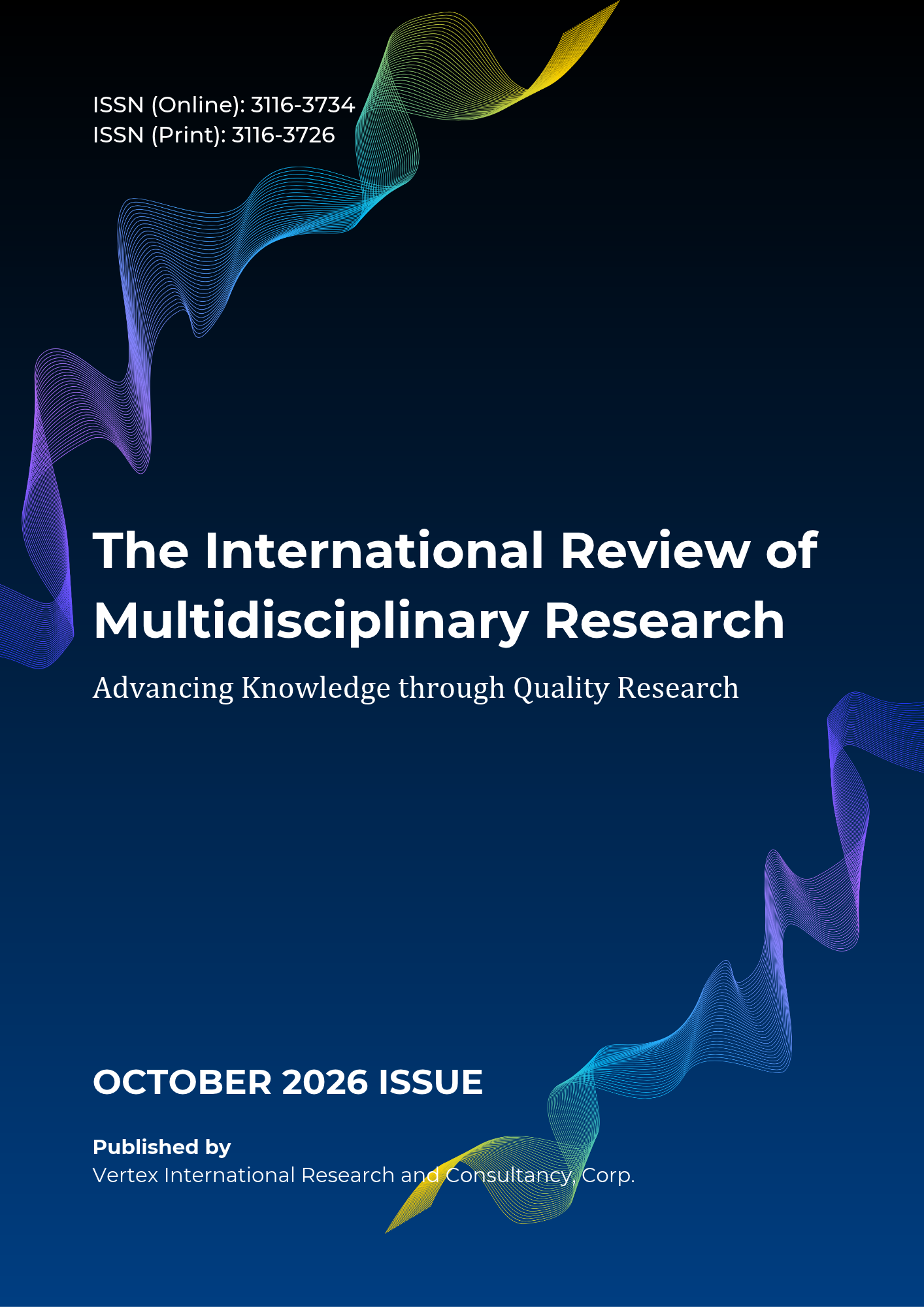
October 2026 Issue – The International Review of Multidisciplinary Research (IRMR)
The October 2026 Issue of The International Review of Multidisciplinary Research (IRMR) features diverse scholarly contributions across multiple disciplines, highlighting innovative ideas, emerging research trends, and evidence-based solutions to contemporary challenges. Committed to advancing knowledge through quality research, this issue promotes academic excellence, interdisciplinary collaboration, and meaningful discoveries that contribute to education, sustainable development, and societal progress.
Articles
Notice to Our Community
The International Review of Multidisciplinary Research (IRMR) is currently in the process of transitioning to a new website. During this period, some features and content may be updated or temporarily unavailable. We appreciate your patience and understanding as we work to create a more meaningful, accessible, and enhanced experience for our authors, users, researchers, and readers. Thank you for your continued support as we move toward a better platform for scholarly communication.
To access our new website, please click the button below. If the link is unavailable or you encounter any issues accessing the site, kindly coordinate with the Editorial Team through Messenger or via email at irmr.admin@vertexcorp.org for assistance.
This website will remain active as a permanent archive for all articles published in our journal. Readers may continue to access published content, metadata, and related information for reference, research, and scholarly purposes.